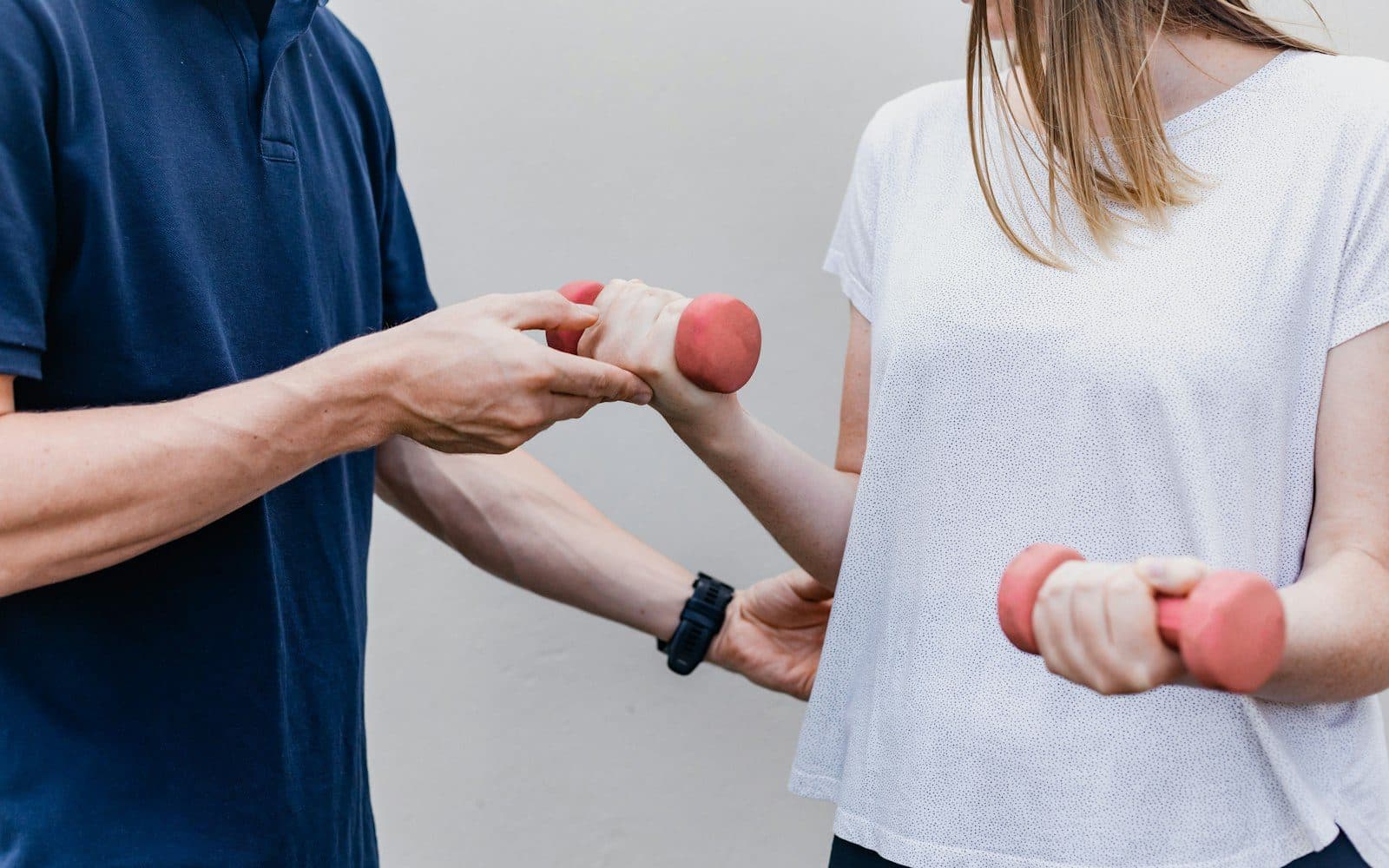
Running is one of the most accessible sports in the world. No team, no court, no booking required. But the same simplicity that makes it accessible also makes it deceptive. The repetitive nature of running means small biomechanical inefficiencies, training errors, or footwear mismatches accumulate into the five injuries we see week in, week out at our Gold Coast clinics.
Here's what they look like, why they happen, and how physiotherapy gets you back on the road.
1. Patellofemoral pain (runner's knee)
If you feel a dull, achy pain at the front of your knee, especially walking down stairs or after sitting for a long time, there's a good chance the kneecap isn't tracking cleanly through its groove on the femur.
It's the most common knee complaint we see in runners. The cause is rarely the knee itself; it's usually further up the chain: weak gluteal muscles letting the femur rotate inward under load, or tight quads and IT band pulling the kneecap laterally.
How we treat it. Hands-on soft-tissue work to release the lateral structures, taping or short-term bracing to offload the joint, and a progressive strengthening program targeting the glutes and deep hip rotators. Most patients are back to a normal running load inside six to eight weeks.
2. Iliotibial band syndrome (ITBS)
A sharp, well-localised pain on the outside of the knee that comes on at a predictable mileage and forces you to stop. Walking is fine. Sitting is fine. Running past a certain distance, not fine.
ITBS isn't really a band problem. It's a lateral hip-stability problem. The IT band is a passive structure that gets compressed against the lateral femoral condyle when the hip can't control the femur on heel strike.
How we treat it. Short-term load reduction (no, you can't run through this one), foam rolling and trigger-point release through the lateral quad and TFL, and, most importantly, single-leg strength work for the glute medius. We'll often add running-cadence retraining: cueing a slightly higher cadence reduces the impact spike that drives ITBS.
3. Achilles tendinopathy
Stiffness and tenderness in the back of the heel, worst on the first few steps in the morning, easing as you warm up. Sometimes a palpable thickening of the tendon itself.
This is a tendon load problem, not an inflammation problem. The old advice (rest, ice, anti-inflammatories) actively delays recovery. Tendons need carefully dosed load to remodel, not protection.
How we treat it. Heavy slow resistance training: calf raises with significant weight, performed slowly, three times a week. The protocol is well-evidenced (Alfredson, Beyer, and others) and works for the majority of patients within 12 weeks. We supplement with running-mechanics work and, occasionally, shockwave therapy for stubborn cases.
4. Shin splints (medial tibial stress syndrome)
A diffuse ache along the inside edge of the shin bone, usually after a recent jump in training volume: a first marathon training cycle, return from a layoff, new running surface.
Shin splints sit on a continuum with stress fractures. We take them seriously. The driver is bone overload faster than the bone can remodel, and that's almost always a training-load error compounded by foot mechanics.
How we treat it. Honest training-load review (often the hardest conversation), gait assessment, calf and intrinsic-foot strengthening, and footwear advice. If we can catch shin splints early, you don't lose much running. If you push through them, you risk a stress fracture that costs you a season.
5. Plantar fasciitis
Sharp pain at the heel that's worst with the first steps out of bed, eases as you walk around, and returns after long periods on your feet.
Despite the name, only a minority of cases involve true inflammation. It's overwhelmingly a tissue-load issue: the plantar fascia is being asked to absorb more than it can recover from, often because the calf complex above it is short or weak.
How we treat it. Calf-stretching protocols, intrinsic-foot strengthening, taping for short-term symptom relief, and, when indicated, shockwave therapy, which has strong evidence for chronic plantar fasciitis. Custom orthotics are sometimes a useful adjunct but rarely the whole solution.
When should you see a physio?
The honest rule: if a niggle has lasted more than a week or is changing your gait, it's no longer a niggle.
Running through pain that alters your form is the fastest way to turn a manageable injury into a stubborn one. Early diagnosis gives us more options, lower training disruption, and a faster return to your goal event.
You don't need a GP referral. Book directly with one of our sports physiotherapists at any of our seven Gold Coast clinics. Most patients are seen within 24 hours.