Why Active Aging Matters for Gold Coast Seniors
From morning beach walks along The Spit to social tennis in Robina, Gold Coast seniors are redefining what it means to age actively.
However, maintaining this vibrant lifestyle requires more than just motivation – it demands proper guidance, understanding, and professional support.
At Queensland Physio Group, we see countless active seniors who want to continue enjoying our region's outdoor lifestyle while staying strong, mobile, and independent.
This comprehensive guide shares our evidence-based approach to active aging, developed through years of working with Gold Coast's senior community.
Understanding Active Aging
Active aging isn't just about exercise – it's about maintaining independence, enjoying social connections, and participating fully in life.
Recent research from the World Health Organisation shows that structured physical activity can reduce age-related decline by up to 40%, yet many seniors are unsure how to exercise safely and effectively.
The Gold Coast Advantage
Our unique location provides unparalleled opportunities for active aging:
- Year-round Mild Climate: Enabling consistent outdoor activity
- Extensive Walking Paths: From Broadwater to Burleigh
- Strong Senior Community: Active social groups and programs
- Professional Support: Allied health services
Common Challenges in Aging: Understanding and Addressing Age-Related Changes
Physical Changes: The Science Behind Age-Related Decline
#### Muscle Mass Reduction (Sarcopenia)
Recent research shows that muscle loss is not an inevitable part of aging, but rather a modifiable condition that responds well to proper intervention.
The Numbers:
- 3-8% muscle mass loss per decade after 30
- Acceleration to 15% loss per decade after 60
- Up to 50% reduction in muscle strength by age 80 if untreated
Why This Matters: Muscle loss affects far more than just strength. Research from the Australian Institute of Health and Welfare shows that maintaining muscle mass:
- Regulates metabolism and blood sugar
- Supports bone density and joint health
- Maintains balance and coordination
- Reduces fall risk by up to 40%
Early Warning Signs:
- Difficulty rising from chairs
- Reduced grip strength
- Slower walking speed
- Increased fatigue during daily activities
#### Balance and Proprioception Changes
Balance isn't just about staying upright – it's a complex system involving multiple body systems:
Visual System Changes:
- Depth perception alterations
- Reduced contrast sensitivity
- Slower adaptation to lighting changes
- Impact on spatial awareness
Vestibular System:
- Inner ear changes affecting equilibrium
- Reduced head movement compensation
- Dizziness with position changes
- Impact on dynamic balance
Proprioceptive System:
- Decreased position awareness
- Reduced foot sensation
- Slower reaction times to surface changes
- Impact on walking confidence
#### Joint Mobility and Flexibility
Joint health directly impacts independence and quality of life. Here's what happens and why it matters:
Age-related joint changes include cartilage changes (reduced water content, decreased shock absorption, increased stiffness, impact on joint movement), connective tissue alterations (reduced elasticity, decreased flexibility, limited range of motion, morning stiffness), and bone density changes (progressive density loss, increased fracture risk, impact on joint stability, connection to activity levels).
Impact on Daily Life: Beyond the Physical Changes
Understanding how these changes affect daily life helps in creating meaningful intervention strategies.
Home Activities: Difficulty with high cupboards, challenges with floor-level tasks, bathroom safety concerns, kitchen task modifications needed.
Community Participation: Shopping challenges (carrying, reaching), public transport navigation, social activity modification, recreation adaptation.
Family Interaction: Grandchild play limitations, garden maintenance challenges, travel restrictions, social confidence impact.
The Role of Professional Guidance in Active Aging
At Queensland Physio Group, we understand that maintaining strength and mobility during aging isn't just about exercise – it's about smart, targeted intervention based on scientific evidence and individual needs.
Professional Assessment: The Foundation of Success
Our comprehensive assessment process goes far beyond basic strength testing.
#### Movement Analysis and Functional Screening
Objective Measurements:
- Dynamic balance assessment using standardized tests
- Strength testing across major muscle groups
- Range of motion measurements for key joints
- Gait analysis and walking pattern assessment
Functional Testing:
Daily activity simulation covers sit-to-stand performance, overhead reaching capacity, floor transfer ability, and stair navigation safety. Balance assessment covers static balance (single and double leg), dynamic balance during movement, reactive balance responses, and environmental adaptation skills.
#### Understanding Your Starting Point
Personal History Analysis:
- Previous injuries and conditions
- Current activity levels
- Medication influences
- Living environment considerations
Goal Setting and Planning:
- Short-term achievability markers
- Long-term aspirations
- Lifestyle integration strategies
- Progress monitoring methods
Evidence-Based Exercise Prescription: Building Strength and Independence
When it comes to maintaining strength and mobility as we age, not all exercise programs are created equal.
At Queensland Physio Group, our approach is built on extensive research and decades of clinical experience working with Gold Coast seniors.
Understanding Progressive Resistance Training
Research published in the Journal of Aging and Physical Activity shows that properly structured resistance training can increase muscle strength by 25-30% within just 12 weeks, even in adults over 75.
#### Phase 1: Building Foundations (Weeks 1-4)
The initial phase is crucial for long-term success. During these first four weeks, we focus on movement pattern development and neural adaptation.
Your body needs to relearn optimal movement patterns. We start with basic exercises that develop neuromuscular connections, establish proper form, build body awareness, and create movement confidence.
Before progressing to complex movements, we perfect fundamental patterns like the hip hinge (essential for daily activities), squat mechanics (crucial for chair transfers), and pushing and pulling movements (vital for independence).
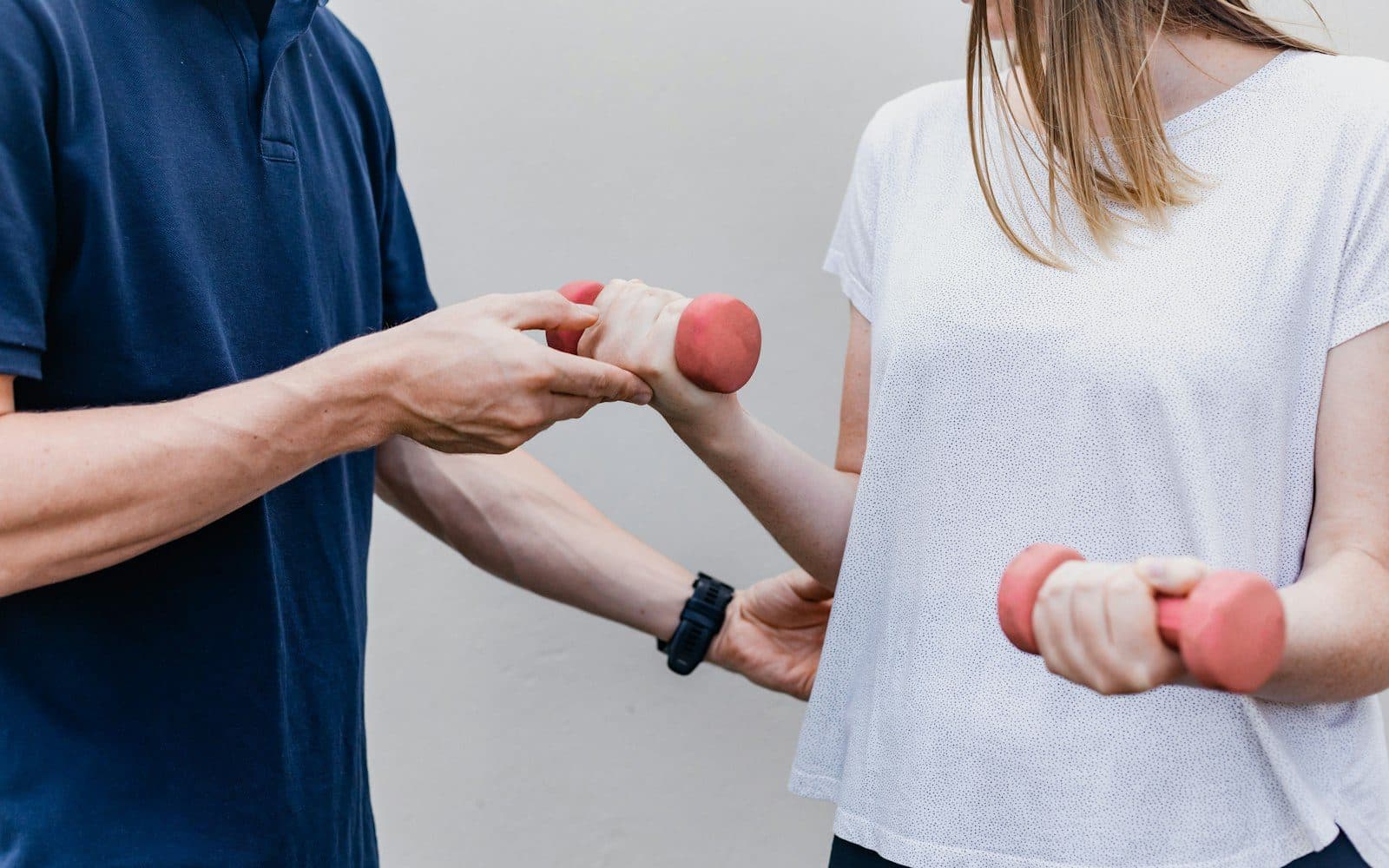
In these early weeks, strength gains come primarily from improved nerve-muscle communication. We start with body weight exercises, use light hand weights for upper body, focus on controlled movement, and emphasise proper breathing patterns.
#### Phase 2: Building Strength (Weeks 5-12)
As your body adapts, we progressively challenge your muscles through strategic load progression based on your individual response to exercise, weekly strength assessments, energy levels and recovery capacity, and functional goal progress.
A typical progression might look like:
- Week 5-6: Introduction of resistance bands
- Week 7-8: Light dumbbell exercises
- Week 9-10: Combined movement patterns
- Week 11-12: Functional task simulation
Lower Body Strength includes a sit-to-stand progression (starts with higher chair height, gradually lowers seat height, adds resistance bands, progresses to single-leg focus) and step training (begins with low step height, incorporates directional changes, adds balance challenges, simulates real-world stairs).
Upper Body Development includes a shoulder strength series starting with supported movements, progressing to overhead reaching, adding resistance for daily tasks, and incorporating rotational movements.
Core and Balance Integration uses a standing balance progression starting with wide stance, narrowing base of support, adding head movements, and incorporating daily task simulation.
#### Phase 3: Maintaining Independence (Ongoing)
The maintenance phase is about sustaining gains while continuing to challenge your body. We prevent plateaus and maintain engagement through exercise variety, new movement patterns, different equipment use, and challenge progression.
Every exercise connects to daily activities: kitchen reach and bend movements, shopping bag carry simulations, gardening position practice, and social activity preparation.
Monitoring Your Progress: Turning Goals into Achievements
At Queensland Physio Group, we believe in measuring progress through both objective improvements and real-life achievements.
Beyond the Numbers: Meaningful Progress Tracking
While traditional measurements are important, we focus on how improvements translate to your daily life.
Functional Achievement Milestones:
- Getting up from low chairs without assistance
- Carrying groceries from car to kitchen in one trip
- Managing full laundry baskets independently
- Gardening for longer periods without fatigue
- Confidently using public transport
Strength Indicators include grip strength testing (predictive of overall strength, correlates with independence, measured every 4 weeks, guides program progression) and lower body power (timed sit-to-stand tests, step test performance, functional reach distance, walking speed assessment).
Balance Confidence: Research shows balance confidence often declines before actual balance ability. We track physical measurements (single leg stance time, dynamic balance tests, reactive balance responses, multi-directional reaching) and confidence scoring (activity-specific confidence ratings, fear of falling assessment, activity avoidance patterns, social participation levels).
Adapting Your Program: The Art of Progression
Our approach to program modification is both systematic and individualized.
We consider physical readiness (energy levels throughout the day, recovery between sessions, sleep quality, general well-being) and exercise response (technique quality, breathing patterns, post-exercise recovery, next-day feedback).
Every four weeks, we conduct a comprehensive review covering strength measures (compare to baseline, track progression rate, identify focus areas, update goals accordingly) and functional tests (real-task performance, movement quality, activity endurance, independence level).
Real success shows in everyday life:
- "I can now walk the entire length of Burleigh Beach"
- "Playing with grandchildren is no longer exhausting"
- "I'm back to my community garden volunteering"
- "Shopping is no longer a challenge"
The Support System: Making Progress Together
Our physiotherapists provide regular check-ins (weekly progress discussions, technique refinement, program adjustments, goal realignment) and education sessions (understanding movement principles, pain management strategies, activity modification techniques, home exercise guidance).
Taking Action: Your Journey to Active Aging Starts Here
After helping thousands of Gold Coast seniors maintain their independence and vitality, we've learned that the hardest part is often taking that first step.
Your First Visit: What to Expect
Walking into a physiotherapy clinic for the first time can feel daunting. The initial consultation (60 minutes) covers a detailed discussion of your current activities, specific challenges, personal goals, and health history, followed by a physical assessment covering movement analysis, strength testing, balance evaluation, and functional capability.
Together, we'll create your personalised roadmap covering realistic goal setting, timeline development, strategy planning, and success measurement criteria.
Our Commitment to You
At Queensland Physio Group, we're passionate about helping Gold Coast seniors maintain their independence and active lifestyle. Our evidence-based approach, combined with personalised care and ongoing support, provides the foundation you need for successful active aging.
We have seven clinics across the Gold Coast and hinterland: Worongary, Robina, Oxenford, Coombabah, Mt Tamborine, Mermaid Waters and Pacific Pines. Opening hours vary by clinic, so check your nearest on our locations page. Book online at qldphysiogroup.com.au or get in touch to start your active aging journey.